A strong educational foundation that supports intellectual, social, emotional, physical, creative and ethical development.
10Classes, LKG to Grade 8
3Learning stages
10Special programmes
11Teaching approaches
01
Academic information
Curriculum & classes.
Curriculum
CBSE curriculum (as per NCERT, NEP 2020 and NCF)
Board affiliation
Yet to be affiliated to CBSE — affiliation pending confirmation
Medium of instruction
English
Classes offered
LKG to Grade 8
LKG
UKG
Grade 1
Grade 2
Grade 3
Grade 4
Grade 5
Grade 6
Grade 7
Grade 8
Grade-wise enrolment
Classrooms full of possibility.
Figures supplied without an academic-year label; please confirm the year before treating these as current totals.
LKG33
UKG34
Grade 138
Grade 227
Grade 325
Grade 426
Grade 524
Grade 618
Grade 710
Grade 815
02
Learning stages
Age-appropriate at every stage.
Stage 01
Foundational Stage
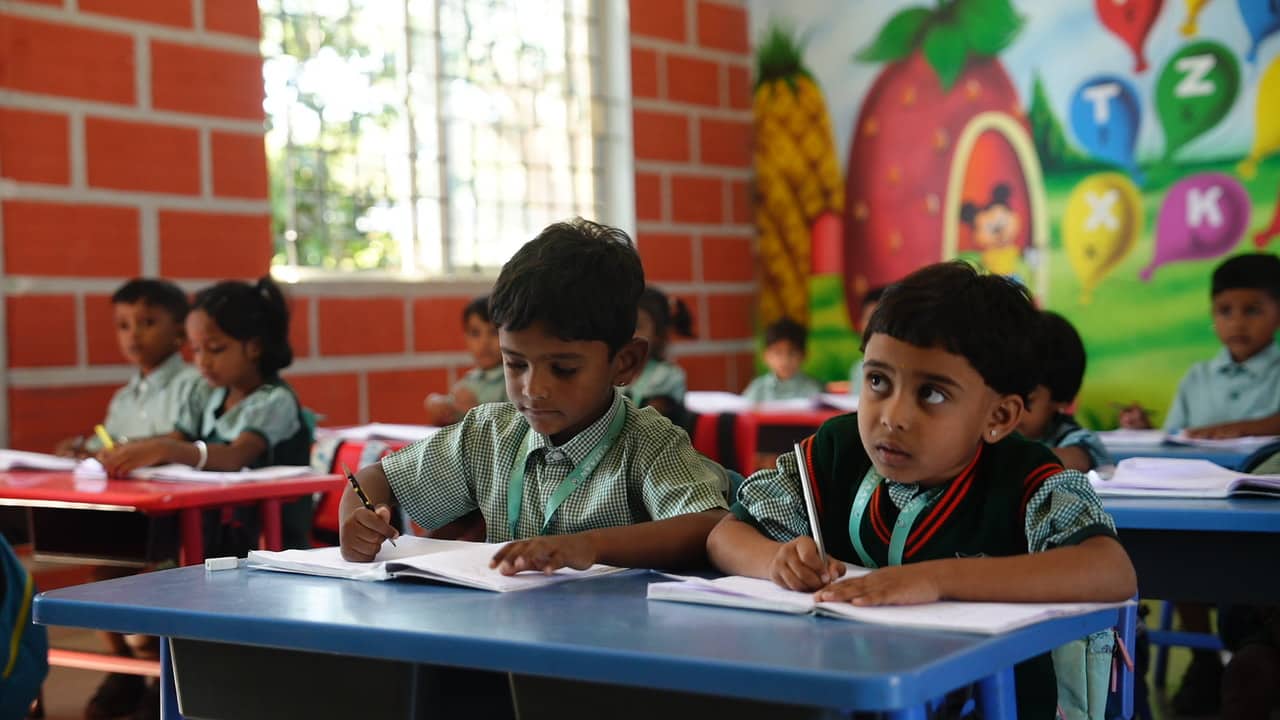
Play-based, activity-based and experiential learning. Literacy, numeracy, communication, motor development, creativity and social-emotional growth develop through stories, rhymes, games, art, music, movement and hands-on experiences.
Stage 02
Primary Stage
Strengthens foundational knowledge while developing curiosity, communication, observation, reasoning and problem-solving through activities, projects, experiments, discussion, reading and creative work.
Stage 03
Middle School
Deeper conceptual understanding, independent thinking, research skills, scientific temper, communication and collaboration, supported by practical activities, projects, technology and interdisciplinary learning.
Teaching methodology
Learning by doing, thinking and creating.
Conceptual understanding rather than rote memorisation
Learning by doing and experiential learning
Competency-based and application-oriented learning
Critical thinking and problem-solving
Communication and collaboration
Creativity and innovation
Art-integrated and interdisciplinary learning
Appropriate use of digital and ICT resources
Individual attention and differentiated learning support
Inclusive classroom practices
Values, life skills and environmental awareness
Teachers regularly observe students’ progress and provide remedial support and enrichment according to individual learning needs.
03
Special academic programmes
Learning beyond conventional academics.
Reading and Literacy Programme
Reading habits, vocabulary, comprehension, communication and appreciation of literature.
Numeracy and Logical Thinking
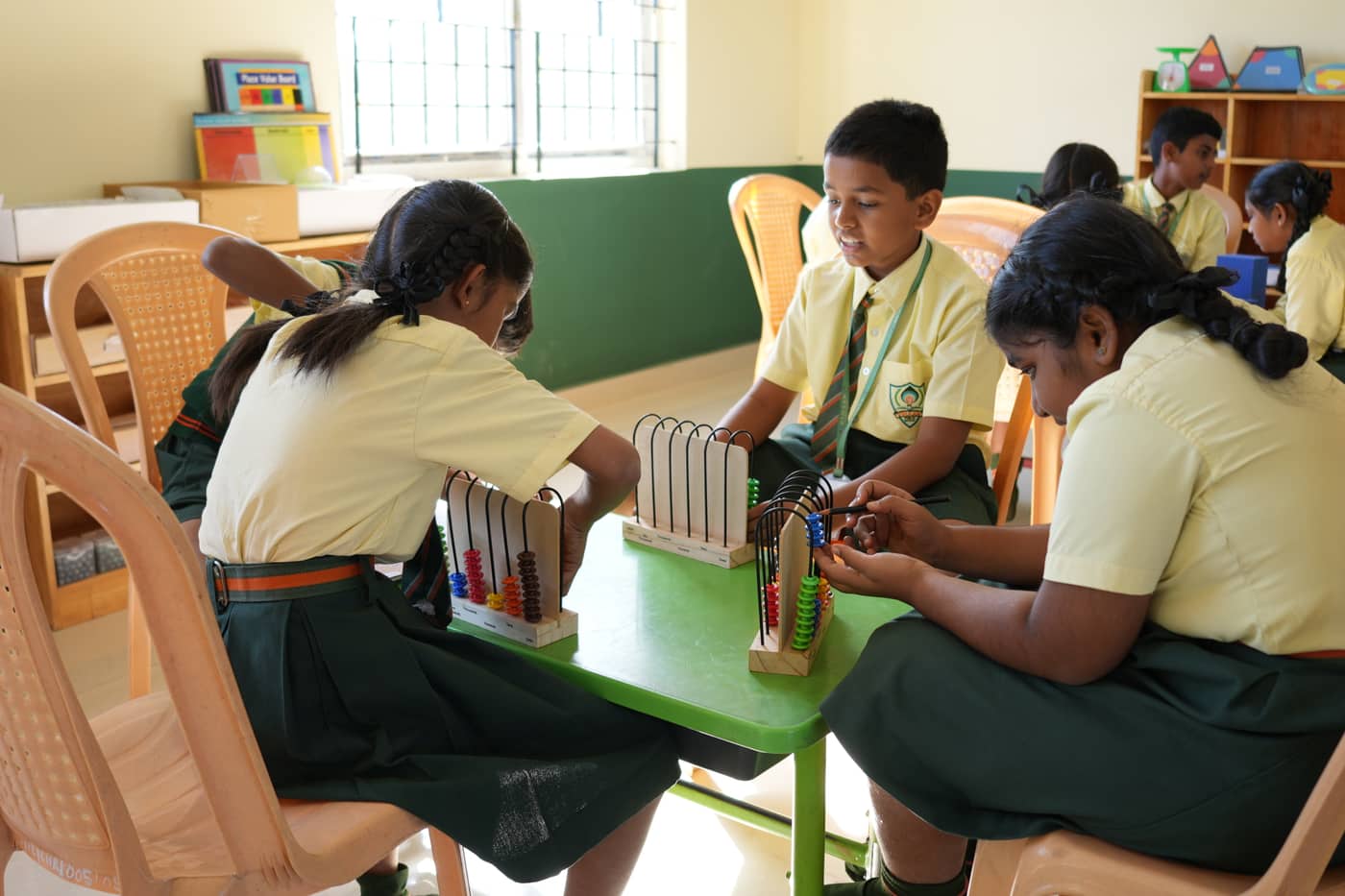
Mathematical understanding, reasoning, problem-solving and logical thinking.
Science and Experiential Learning
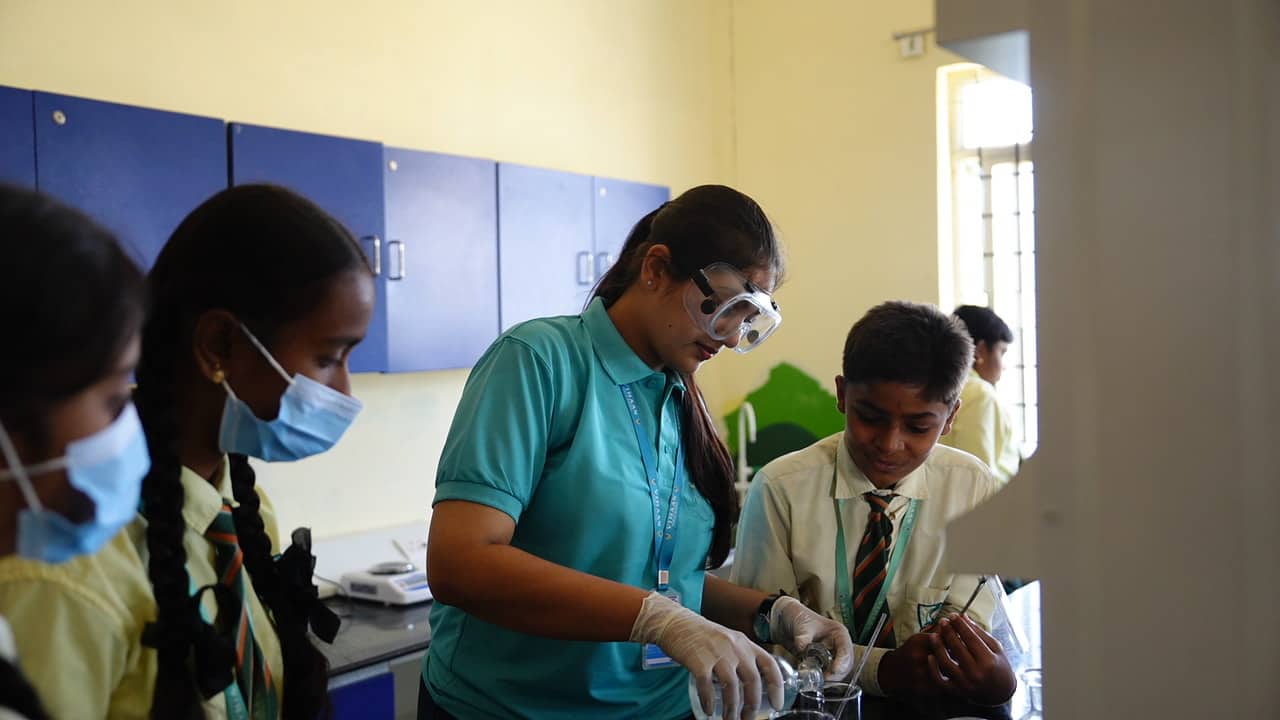
Hands-on experiments, demonstrations, observation and projects that encourage inquiry.
Digital Literacy and Technology
Age-appropriate computers, digital tools, responsible technology use and cyber safety.
Art-Integrated Learning
Drawing, craft, music, dance, drama and creative expression woven into learning.
Life Skills and Value Education
Communication, decision-making, empathy, leadership, teamwork and citizenship.
Environmental Education
Conservation, waste management, cleanliness and responsible use of resources.
Health, Yoga and Physical Education
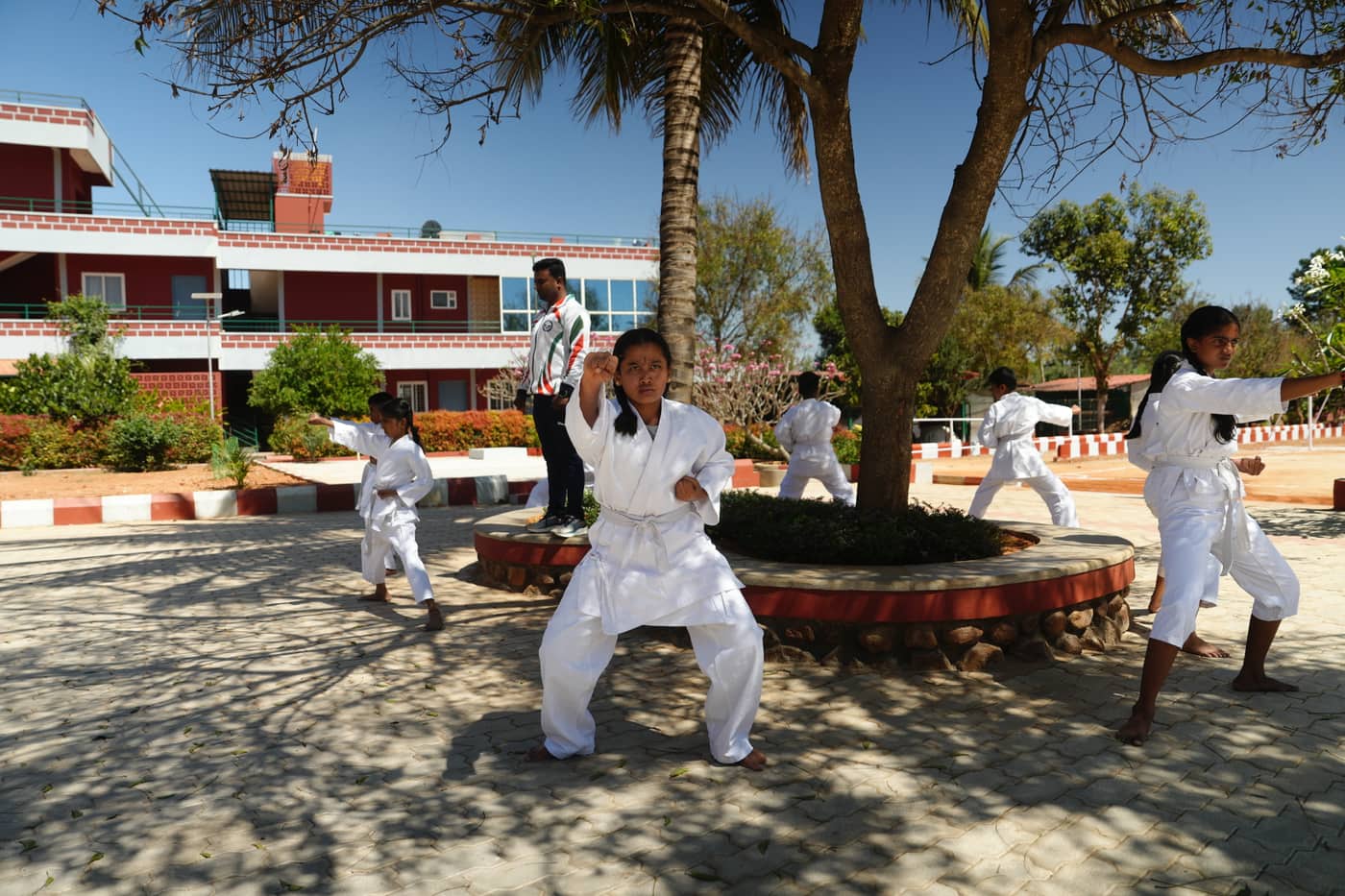
Physical activity, sports, yoga, fitness and healthy living.
Cultural and Heritage Education
Indian traditions, languages, cultural diversity and respect for other cultures.
Remedial and Enrichment Support
Reinforcement for learners who need it and further challenge for those who are ready.
04
Assessment
Assessment that supports learning.
Assessment is an integral part of the teaching-learning process, not merely a means of awarding marks. It identifies what students know, what they can apply, the competencies they have developed and where they need further support.
Classroom observation
Oral activities and discussions
Written assignments and worksheets
Projects and practical activities
Subject enrichment activities
Competency-based questions
Periodic assessments
Portfolio and notebook work
Term examinations, where applicable
For younger learners, assessment is primarily developmental and observation-based.
Teachers use assessment outcomes to provide constructive feedback, identify learning gaps, plan remedial support and offer enrichment according to individual learning needs.
“
Assessment should support learning, not merely measure it.
Our approach to assessment
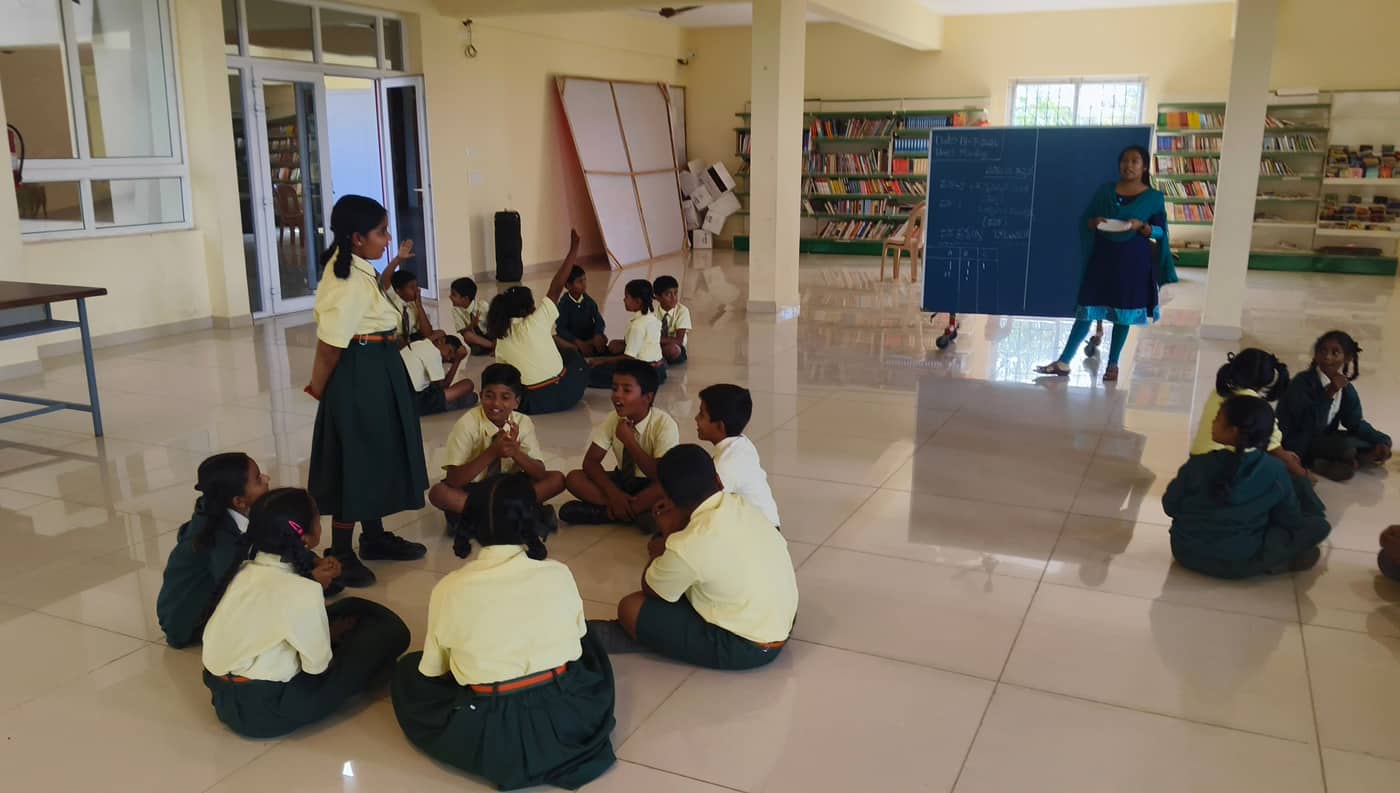
Learning in photographs.
The learning universe
A thousand sparks. A world of ideas.
Explore the existing club list. Formal curriculum details pending.
Languages
Find your voice.
English Public Speaking Club connects language with expression.
An invitation to explore. Call or WhatsApp +91 9535783399 to begin. The online form prepares a draft only; it does not send an enquiry or book a visit.
 VIHAANPublic School